
The Air We Share: Finding Space to Breathe in a Heavy World
by Natasha Walker
“We cannot fight for a better world if we have no air left in our lungs. Resting right now isn't giving up; it is regrouping. If we want to clear the air, we have to start with how we breathe.” — NW
For days, the sky has worn a heavy, bruised orange. The sun, usually a brilliant and reliable anchor in our daily lives, has been reduced to a pale, ghostly disc, choked out by a thick blanket of wildfire smoke. Step outside, and the air tastes metallic, acrid, and thick. It’s a physical reminder of our vulnerability. But as we retreated indoors, sealing our windows and turning our air filters to high, it became impossible not to feel the weight of a deeper, quieter truth: the atmosphere outside is a mirror of the world within.
This particulate-heavy air is a physical manifestation of what many of us have been feeling emotionally and socially for a long time. Just as the smoke blocks out the sun, the collective anxiety, noise, and friction of our modern world have created a kind of social sediment. This "dirt" in our cultural air occludes our visibility. It smudges our screens and our lenses, making it incredibly difficult to see one another's basic humanity.
When we cannot see clearly, we default to fear. We feel unsafe, vulnerable, and deeply isolated.
Like hunkering down in our living rooms to escape the air quality alerts, we have psychologically sheltered in place. We filter our conversations, we limit our exposure, and we wait behind protective barriers (facebook groups, church committees, neighborhood potlucks, etc.), hoping the environment will return to "normal" so we can finally step outside without armor. It is exhausting to live in a state of suspended animation. But there is a quiet wisdom in this forced pause.
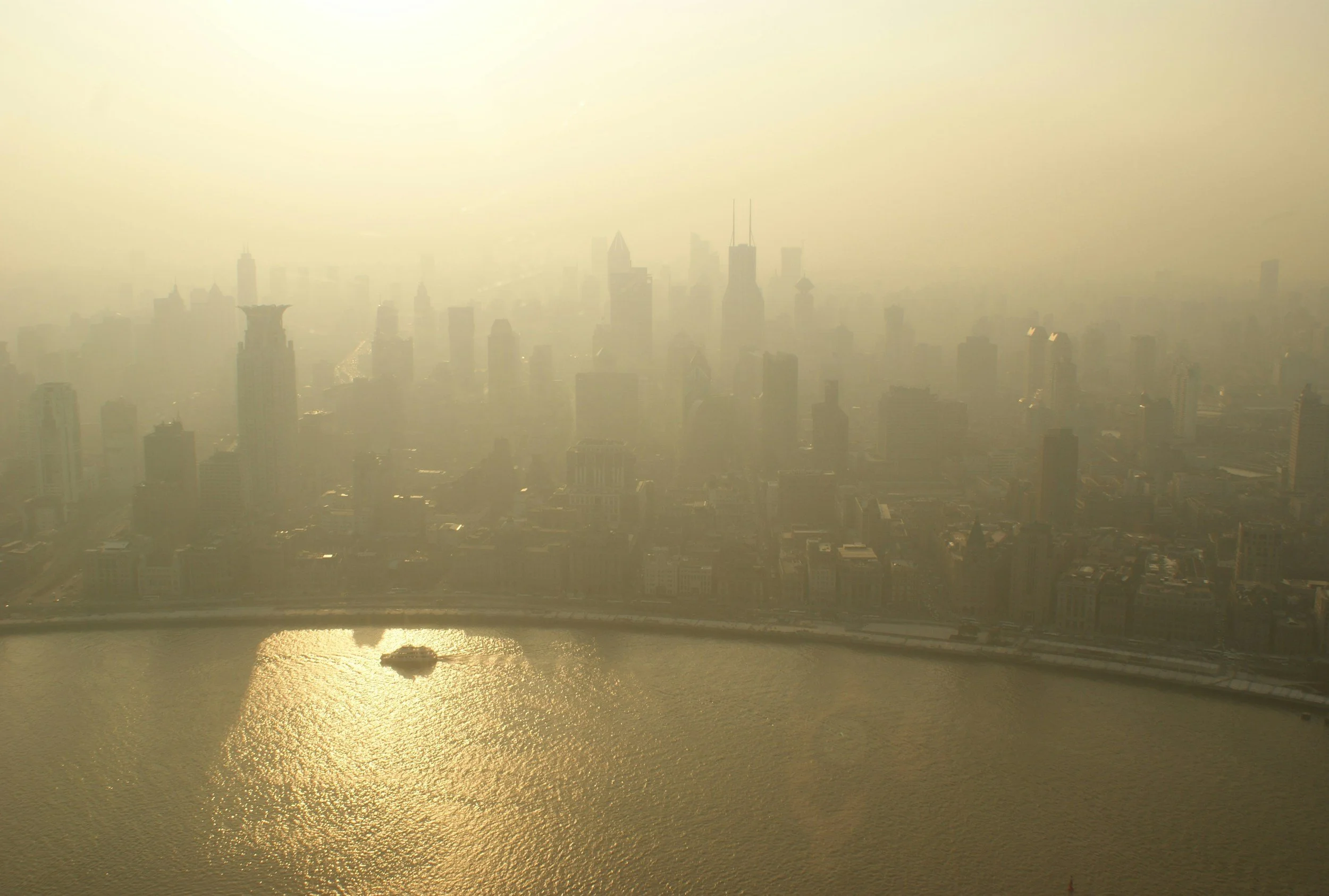
Image of a city downtown skyline, next to a shining body of water, covered in a thick, yellow haze.
First, we must remind ourselves of a fundamental truth: this cloudiness is temporary. No matter how stubborn the haze feels right now, the winds will shift. The rain will fall. The sky will clear, and the sun will return. The current discomfort and inconvenience, while heavy, are not permanent states of being.
Second, there is a profound, strategic value in learning how to rest.
[ Inhale ] --> Acknowledge the weight.
[ Exhale ] --> Release the need to fix it all right now.
With the heavy lifting of autumn on the horizon—including the vital democratic actions and civic engagements of the fall—we cannot afford to run on empty. We cannot fight for a better world if we have no air left in our lungs. Resting right now isn't giving up; it is regrouping.
If we want to clear the air, we have to start with how we breathe. We have to consciously decide to reclaim our rhythm before we step back out into the fray.
As we navigate these hazy days, I invite you to consider:
What are you doing to catch your breath? What boundaries are you setting, what quiet spaces are you seeking, and how are you allowing your mind and body to restore?
Where are you providing oxygen for others? How can you be a breath of fresh air in a stifling room? Where can you offer grace, clarity, or a moment of relief to someone else who is struggling to see through the smoke?
Take a deep breath.
Let the dust settle.
The sun is still there, just beyond the haze,
waiting for us to welcome it back.
Natasha Walker
Executive Director, UUANI